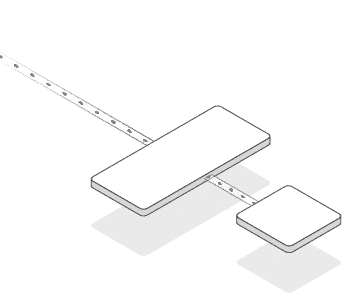
Customer communication rarely originates from a single system. Specialist applications, CRM systems, ERP solutions, portals, and other business applications provide the data, events, and processes that drive communication.
Serie M/ integrates into these existing environments and handles the creation, orchestration, and delivery of customer communications. Core systems retain responsibility for business processes and data, while Serie M/ forms the communication layer within the overall architecture.
To ensure this communication layer can be flexibly integrated into existing architectures, Serie M/ supports a variety of integration patterns. Depending on the application, process, and technical environment, communication processes can be initiated and executed through APIs, batch processing, or browser-based integration.
Java-based applications can directly access Serie M/ functionality and initiate communication processes within existing systems.
For high-volume processing scenarios and recurring communication runs, Serie M/ supports established batch processing and file exchange mechanisms.
Functions and editors can be embedded into browser-based applications, enabling users to manage communications directly within existing specialist processes.
In practice, integration requirements range from individual document requests initiated by line-of-business applications to fully automated communication processes originating from CRM, ERP, or portal environments.
Whether customer correspondence generated from a CRM system, contract documents created from a business application, or regulatory communications triggered by an ERP process, Serie M/ connects existing business applications with your organization’s communication channels.
Standard connectors are available for frequently used systems and application environments. These include SAP and Salesforce environments as well as other industry-specific systems, enabling communication processes to be initiated directly from existing business workflows.

Flexible operating models for cloud, hybrid, and on-premises environments.
Centralized administration, governance, and controlled deployment processes.
Secure operating models, authentication, and compliance for business-critical communications.
"*" indicates required fields